Acquisti, A., Taylor, C., & Wagman, L. (2016). The economics of privacy. Journal of Economic Literature, 54(2), 442-492. https://doi.org/10.1257/jel.54.2.442
Armstrong, G., Adam, S., Denize, S., & Kotler, P. (2014). Principles of marketing (6th ed.). Pearson.
Belk, R. W. (2013). Extended self in a digital world. Journal of Consumer Research, 40(3), 477-500. https://doi.org/10.1086/671052
De Keyser, A., Lemon, K. N., Klaus, P., & Keiningham, T. L. (2015). A framework for understanding and managing the customer experience. Marketing Science Institute Working Paper Series, 15(121), 1-47.
Denegri-Knott, J., & Zwick, D. (2012). Tracking prosumption work on eBay: Reproduction of desire and the challenge of slow re-McDonaldization. American Behavioral Scientist, 56(4), 439-458. https://doi.org/10.1177/0002764211429360
Duhachek, A. (2005). Coping: A multidimensional, hierarchical framework of responses to stressful consumption episodes. Journal of Consumer Research, 32(1), 41-53. https://doi.org/10.1086/426612
Dunbar, R. I. M. (1992). Neocortex size as a constraint on group size in primates. Journal of Human Evolution, 22(6), 469–493. https://doi.org/10.1016/0047-2484(92)90081-J
Gielens, K., & Steenkamp, J. B. E. M. (2019). Branding in the era of digital (dis)intermediation. International Journal of Research in Marketing, 36(3), 367-384. https://doi.org/10.1016/j.ijresmar.2019.01.005
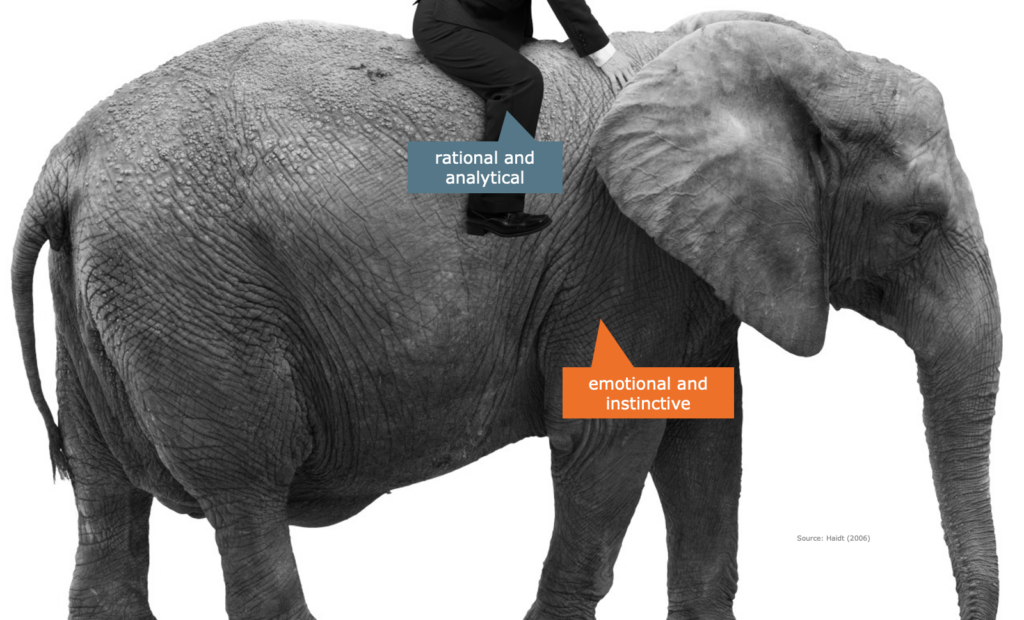
Haidt, J. (2006). The happiness hypothesis: Finding modern truth in ancient wisdom. Basic Books.
Hartzog, W., & Richards, N. (2019). Privacy’s constitutional moment. Boston College Law Review, 61(2), 419-482.
Helbing, D. (Ed.). (2015). Thinking ahead – Essays on big data, digital revolution, and participatory market society. Springer. https://doi.org/10.1007/978-3-319-15078-9
Hennig-Thurau, T., Malthouse, E. C., Friege, C., Gensler, S., Lobschat, L., Rangaswamy, A., & Skiera, B. (2010). The impact of new media on customer relationships. Journal of Service Research, 13(3), 311-330. https://doi.org/10.1177/1094670510375460
Holbrook, M. B., & Hirschman, E. C. (1982). The experiential aspects of consumption: Consumer fantasies, feelings, and fun. Journal of Consumer Research, 9(2), 132-140. https://doi.org/10.1086/208906
Kahneman, D. (2011). Thinking, fast and slow. Farrar, Straus and Giroux.
Kahneman, D., & Tversky, A. (1979). Prospect theory: An analysis of decision under risk. Econometrica, 47(2), 263–291. https://doi.org/10.2307/1914185
Kaptein, M., Parvinen, P., & Pöyry, E. (2015). The danger of engagement: Behavioral observations of online community activity and service spending in the online gaming context. International Journal of Electronic Commerce, 20(1), 50-75.
Kozinets, R. V. (2019). Consuming technocultures: An extended JCR curation. Journal of Consumer Research, 46(3), 620-627. https://doi.org/10.1093/jcr/ucz034
Kumar, V., & Pansari, A. (2016). Competitive advantage through engagement. Journal of Marketing Research, 53(4), 497-514. https://doi.org/10.1509/jmr.15.0044
Kumar, V., & Reinartz, W. (2016). Creating enduring customer value. Journal of Marketing, 80(6), 36-68. https://doi.org/10.1509/jm.15.0414
Kumar, V., & Shah, D. (2009). Expanding the role of marketing: From customer equity to market capitalization. Journal of Marketing, 73(6), 119-136. https://doi.org/10.1509/jmkg.73.6.119
Kumar, V., Jones, E., Venkatesan, R., & Leone, R. P. (2011). Is market orientation a source of sustainable competitive advantage or simply the cost of competing? Journal of Marketing, 75(1), 16-30. https://doi.org/10.1509/jm.75.1.16
Lamberton, C., & Stephen, A. T. (2016). A thematic exploration of digital, social media, and mobile marketing: Research evolution from 2000 to 2015 and an agenda for future inquiry. Journal of Marketing, 80(6), 146-172. https://doi.org/10.1509/jm.15.0415
Lawer, C., & Knox, S. (2006). Customer advocacy and brand development. Journal of Product & Brand Management, 15(2), 121-129.
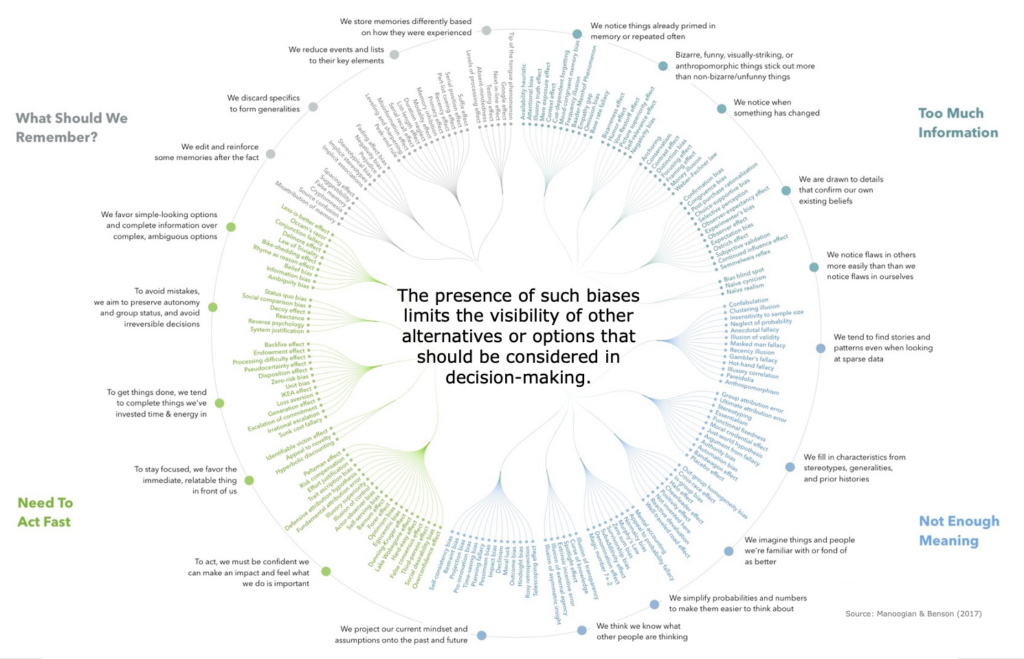
Manoogian, A., & Benson, B. (2017, January, 8th). 4 conundrums of intelligence. Medium. https://medium.com/thinking-is-hard/4-conundrums-of-intelligence-2ab78d90740f
Martin, K. D., & Murphy, P. E. (2017). The role of data privacy in marketing. Journal of the Academy of Marketing Science, 45(2), 135–155. https://doi.org/10.1007/s11747-016-0495-4
Martin, K. D., Borah, A., & Palmatier, R. W. (2017). Data privacy: Effects on customer and firm performance. Journal of Marketing, 81(1), 36-58. https://doi.org/10.1509/jm.15.0497
McKnight, D. H., Choudhury, V., & Kacmar, C. (2002). Developing and validating trust measures for e-commerce: An integrative typology. Information Systems Research, 13(3), 334–359. https://doi.org/10.1287/isre.13.3.334.81
Metcalfe, M., & Mischel, W. (1999). A hot/cool-system analysis of delay of gratification: Dynamics of willpower. Psychological Review, 106(1), 3–19. https://doi.org/10.1037/0033-295X.106.1.3
Mischel, W. (2014). The marshmallow test: Mastering self-control. Little, Brown and Company.
Morgan, R. M., & Hunt, S. D. (1994). The commitment-trust theory of relationship marketing. Journal of Marketing, 58(3), 20-38. https://doi.org/10.2307/1252308
Morris, J. W. (2015). Selling digital music, formatting culture. University of California Press.
Morris, J. W., & Powers, D. (2015). Control, curation and musical experience in streaming music services. Creative Industries Journal, 8(2), 106-122. https://doi.org/10.1080/17510694.2015.1090222
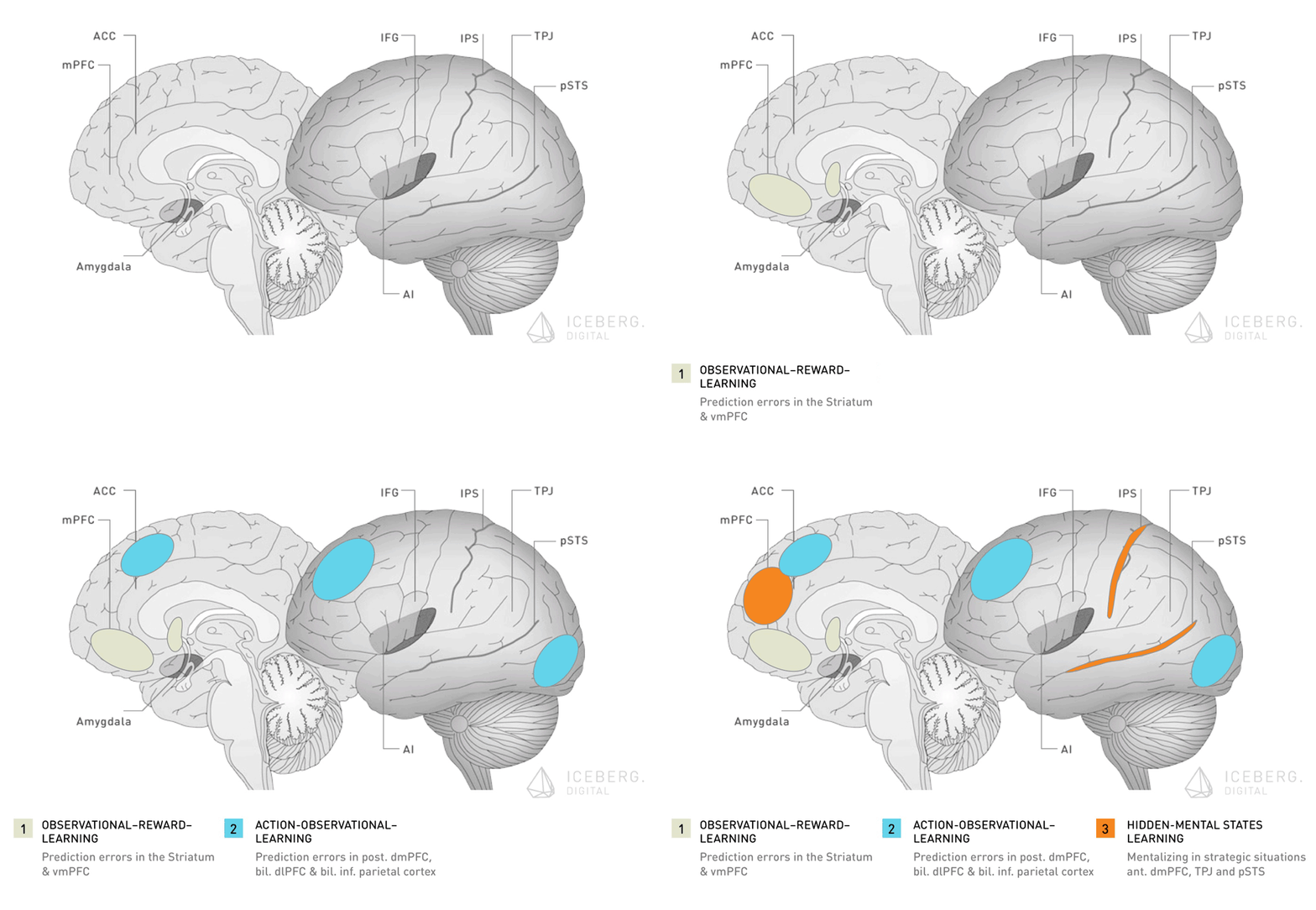
O’Doherty, J. P., Cockburn, J., & Pauli, W. M. (2013). Learning, reward, and decision making in the human brain. In P. W. Glimcher & E. Fehr (Eds.), Neuroeconomics: Decision making and the brain. 2nd ed., 419–436. Academic Press. https://doi.org/10.1016/B978-0-12-416008-8.00022-3
Parasuraman, A., Zeithaml, V. A., & Malhotra, A. (2005). E-S-QUAL: A multiple-item scale for assessing electronic service quality. Journal of Service Research, 7(3), 213-233.
Parker, G. G., Van Alstyne, M. W., & Choudary, S. P. (2016). Platform revolution: How networked markets are transforming the economy and how to make them work for you. W. W. Norton & Company.
Payne, A., & Frow, P. (2005). A strategic framework for customer relationship management. Journal of Marketing, 69(4), 167-176. https://doi.org/10.1509/jmkg.2005.69.4.167
Payne, A., & Frow, P. (2017). Relationship marketing: Looking backwards towards the future. Journal of Services Marketing, 31(1), 11-15. https://doi.org/10.1108/JSM-11-2016-0380
Plassmann, H. (2017, October 10). The pain of paying. Conference presentation. Society for Neuroeconomics Annual Meeting, Toronto, Canada.
Plassmann, H., O’Doherty, J., Shiv, B., & Rangel, A. (2008). Marketing actions can modulate neural representations of experienced pleasantness. Proceedings of the National Academy of Sciences, 105(3), 1050–1054. https://doi.org/10.1073/pnas.0706929105
Plassmann, H., Venkatraman, V., Huettel, S., & Yoon, C. (2015). Consumer neuroscience: Applications, challenges, and possible solutions. Journal of Marketing Research, 52(4), 427–435. https://doi.org/10.1509/jmr.14.0048
Richards, N. M., & Hartzog, W. (2019). Privacy’s trust gap. Yale Law Journal, 128(4), 1180–1247.
Richards, N. M., & Hartzog, W. (2020). The pathologies of digital consent. Washington University Law Review, 96(6), 1461-1503.
Riedl, R., & Javor, A. (2012). The biology of trust: Integrating evidence from genetics, endocrinology, and functional brain imaging. Journal of Neuroscience, Psychology, and Economics, 5(2), 63-91.
Rode, C., Cosmides, L., Hell, W., & Tooby, J. (1999). When and why do people avoid unknown probabilities in uncertain decisions? Testing some predictions from optimal foraging theory. Cognition, 72(3), 269–304. https://doi.org/10.1016/S0010-0277(99)00042-6
Rose, S., Clark, M., Samouel, P., & Hair, N. (2012). Online customer experience in e-retailing: An empirical model of antecedents and outcomes. Journal of Retailing, 88(2), 308-322. https://doi.org/10.1016/j.jretai.2012.03.001
Simon, H. A. (1982). Models of bounded rationality. MIT Press.
Simon, H. A. (1997). Models of bounded rationality: Empirically grounded economic reason (Vol. 3). MIT Press.
Stephens, D. W. (1981). The logic of risk-sensitive foraging preferences. Animal Behaviour, 29(2), 628–629. https://doi.org/10.1016/S0003-3472(81)80128-5
Szeliga, Michael (1996): Push und Pull in der Markenpolitik, Peter Lang Verlag, [online] https://www.peterlang.com/document/1068231.
Thaler, R. H. (2016). Misbehaving: The making of behavioral economics. W. W. Norton & Company.
Urban, G. L. (2004). The emerging era of customer advocacy. MIT Sloan Management Review, 45(2), 77-82.
Urban, G. L. (2005a). Don’t just relate – Advocate! Customer advocacy as a new paradigm for marketing. Upper Saddle River, NJ: Wharton School Publishing.
Urban, G. L. (2005b). Customer advocacy: A new era in marketing? Journal of Public Policy & Marketing, 24(1), 155-159.
Vargo, S. L., & Lusch, R. F. (2004). Evolving to a new dominant logic for marketing. Journal of Marketing, 68(1), 1-17. https://doi.org/10.1509/jmkg.68.1.1.24036
Verhoef, P. C., Broekhuizen, T., Bart, Y., Bhattacharya, A., Dong, J. Q., Fabian, N., & Haenlein, M. (2021). Digital transformation: A multidisciplinary reflection and research agenda. Journal of Business Research, 122, 889-901. https://doi.org/10.1016/j.jbusres.2019.09.022
Waldman, A. E. (2018). Privacy, notice, and design. Stanford Technology Law Review, 21(1), 74-127.
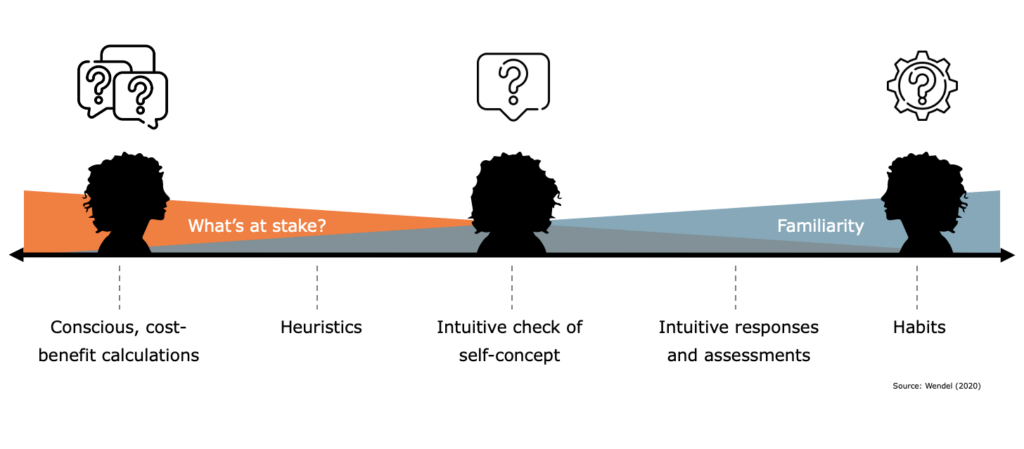
Wendel, S. (2020). Designing for behavior change: Applying psychology and behavioral economics. O’Reilly Media.
Wilson, H. J., & Daugherty, P. R. (2018). Collaborative intelligence: Humans and AI are joining forces. Harvard Business Review, 96(4), 114-123.
Wilson, H. J., Daugherty, P. R., & Morini-Bianzino, N. (2017). The jobs that artificial intelligence will create. MIT Sloan Management Review, 58(4), 14-16.
Zuboff, S. (2019). The age of surveillance capitalism: The fight for a human future at the new frontier of power. Public Affairs.