References Chapter 3:
Amodei, D., Olah, C., Steinhardt, J., Christiano, P., Schulman, J., & Mané, D. (2016). Concrete problems in AI safety. arXiv.org. https://arxiv.org/abs/1606.06565.
Antil, V. (2025). The end of trust: Embracing evidence-based privacy. Privado.ai. Available: https://www.privado.ai/post/the-end-of-trust-embracing-evidence-based-privacy [2025, November 22].
Bengio, Y., de Leon Ferreira de Carvalho, A. C. P., Fox, B., Nemer, M., Rivera, R. P., Zeng, Y., & Khan, S. M., et al. (2025). International AI Safety Report 2025. UK Department for Science, Innovation and Technology and AI Safety Institute. Available: https://www.gov.uk/government/publications/international-ai-safety-report-2025 [2025, November 26].
C2PA. (2022). C2PA Releases Specification of World’s First Industry Standard for Content Provenance. Coalition for Content Provenance and Authenticity. Available:
Castelfranchi, C., & Falcone, R. (2010). Trust theory: A socio-cognitive and computational model. John Wiley & Sons.
Dekker, S. (2011). Drift into failure: From hunting broken components to understanding complex systems. Ashgate. https://doi.org/10.1201/9781315257396.
Demirci, U., & Karagoz, P. (2022). Explicit and Implicit Trust Modeling for Recommendation. Digital, 2(4), 444–462. https://doi.org/10.3390/digital2040024
Deutsch, M. (1962). Cooperation and trust: Some theoretical notes. In M. R. Jones (Ed.), Nebraska Symposium on Motivation. 275–320. University of Nebraska Press.
Eagly, A. H., & Chaiken, S. (1993). The psychology of attitudes. Harcourt Brace Jovanovich.
Eccles, R., Newquist, S., & Schatz, R. (2007). Reputation and its risks. Harvard Business Review, 85, 104–114, 156. Retrieved from https://hbr.org/2007/01/reputation-and-its-risks
Einwiller, S., Geissler, U., & Will, M. (2000). Engendering trust in internet businesses using elements of corporate branding. Working Paper No. 00-04. Institute for Media and Communications Management, University of St. Gallen.
Erickson, T., & Kellogg, W. A. (2000). Social translucence: An approach to designing systems that support social processes. ACM Transactions on Computer-Human Interaction, 7(1), 59-83. https://doi.org/10.1145/344949.344958
European Parliament & Council. (2024). Regulation (EU) 2024/1183 of 11 April 2024 amending Regulation (EU) No. 910/2014 as regards establishing the European Digital Identity Framework (eIDAS 2.0). Official Journal of the European Union. Available: https://eur-lex.europa.eu/eli/reg/2024/1183/oj/eng [2025, November 24].
FINMA. (2024). Guidance 08/2024: Governance and risk management when using artificial intelligence. Available: https://www.finma.ch/en/~/media/finma/dokumente/dokumentencenter/myfinma/4dokumentation/finma-aufsichtsmitteilungen/20241218-finma-aufsichtsmitteilung-08-2024.pdf [2025, November 19].
Floridi, L., & Cowls, J. (2019). A Unified Framework of Five Principles for AI in Society. Harvard Data Science Review, 1(1). https://doi.org/10.1162/99608f92.8cd550d1.
Giddens, A. (1995). The consequences of modernity (2nd ed.). Polity Press.
Helbing, D. (Ed.). (2015). Thinking ahead—Essays on big data, digital revolution, and participatory market society. Springer. https://doi.org/10.1007/978-3-319-15078-9
Hoffmann, C. P., Lutz, C., & Meckel, M. (2014). Digital Natives or Digital Immigrants? The Impact of User Characteristics on Online Trust. Journal of Management Information Systems, 31(3), 138–171. https://doi.org/10.1080/07421222.2014.995538
Hoffmann, C. P., Lutz, C., Ranzini, G. (2024). Inequalities in privacy cynicism: An intersectional analysis of agency constraints. Big Data & Society. 11. 1-13. 10.1177/20539517241232629
Hollnagel, E., Woods, D. D., & Leveson, N. (Eds.). (2006). Resilience engineering: Concepts and precepts. Ashgate.
Hyseni, V. (2023). AI under watch: The EU AI Act. PECB Insights. Available: https://pecb.com/en/article/ai-under-watch-the-eu-ai-act [2025, November 24].
Hyseni, V. (2024). Understanding the digital trust framework. PECB Publishing. Available: https://pecb.com/en/article/understanding-the-digital-trust-framework-a-guide-for-organizations [2025, November 24].
Josang, A., Ismail, R., & Boyd, C. (2007). A survey of trust and reputation systems for online service provision. Decision Support Systems, 43(2), 618–644. https://doi.org/10.1016/j.dss.2005.05.019
Kahneman, D., & Tversky, A. (1979). Prospect theory: An analysis of decision under risk. Econometrica, 47(2), 263–291. https://doi.org/10.2307/1914185
Kahre, R., & Rifkin, J. (1997). Trust and the self: Concepts in modern consumer society. Marketing Press.
Kirk, C. P., & Givi, J. (2025). The AI-authorship effect. Journal of Business Research, 186, 114984. https://doi.org/10.1016/j.jbusres.2024.114984.
Kramer, R. M. (1999). Trust and distrust in organizations: Emerging perspectives, enduring questions. Annual Review of Psychology, 50(1), 569–598. https://doi.org/10.1146/annurev.psych.50.1.569
Linkov, I., & Kott, A. (2019). Cyber resilience of systems and networks. Springer.
Lockey, S., & Gillespie, N. (2025). Trust in AI. In S. Sadiq (Ed.), Enterprise AI. https://doi.org/10.1007/978-3-032-01940-0_10.
Luhmann, N. (1989). Vertrauen: Ein Mechanismus der Reduktion sozialer Komplexität (4th ed.). Enke.
Luhmann, N. (1997). Die Gesellschaft der Gesellschaft [The Society of Society]. Suhrkamp.
Lukyanenko, R., Maass, W. & Storey, V. C. (2022). Trust in artificial intelligence: From a Foundational Trust Framework to emerging research opportunities. Electronic Markets, 32(4), 1993–2020. https://doi.org/10.1007/s12525-022-00605-4
Marcus, G. (2020). The Next Decade in AI: Four Steps towards Robust Artificial Intelligence. arXiv.org. https://arxiv.org/abs/2002.06177.
Mayer, R. C., Davis, J. H., & Schoorman, F. D. (1995). An integrative model of organizational trust. Academy of Management Review, 20(3), 709-734. https://doi.org/10.2307/258792
McKnight, D. H., Choudhury, V., & Kacmar, C. (2002). Developing and validating trust measures for e-commerce: An integrative typology. Information Systems Research, 13(3), 334–359. https://doi.org/10.1287/isre.13.3.334.81
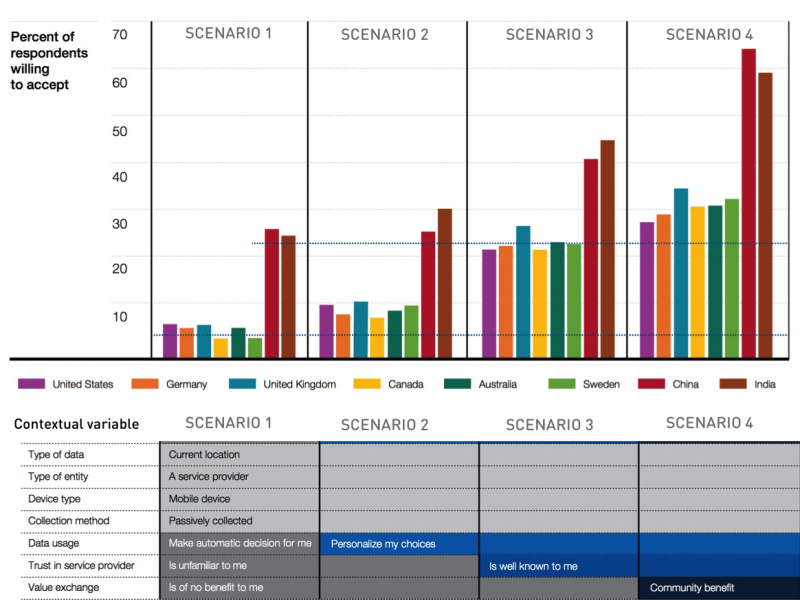
Nguyen, T. D., Bedford, L., & Sengupta, S. (2013). A global perspective on privacy and security: User acceptance in the new normal. Microsoft Research White Paper.
NIST. (2023). AI Risk Management Framework. National Institute of Standards and Technology. Available: https://www.nist.gov/itl/ai-risk-management-framework [2025, November 26].
Petermann, F. (1985). Vertrauen und Risikobereitschaft: Theoretische und empirische Befunde zur Sozialpsychologie des Vertrauens. Huber.
Ripperger, T. (1998). Ökonomik des Vertrauens: Analyse eines Organisationsprinzips. Mohr Siebeck.
Raji, I. D., Smart, A., White, R. N., Mitchell, M., Gebru, T., Hutchinson, B., Smith-Loud, J., Theron, D., & Barnes, P. (2020, January 3). Closing the AI accountability gap: Defining an End-to-End Framework for internal Algorithmic auditing. arXiv.org. https://arxiv.org/abs/2001.00973.
Rushkoff, D. (2017). Throwing rocks at the Google bus: How growth became the enemy of prosperity. Portfolio.
Sheehan, K. B., & Hoy, M. G. (2000). Dimensions of privacy concern among online consumers. Journal of Public Policy & Marketing, 19(1), 62–73. https://doi.org/10.1509/jppm.19.1.62.16949
Tölke, A. (2024). Trust is the key to success. Available: https://www.ti8m.com/en/blog/innovator-of-trust [2025, May 27]
ToIP. (2022). Design principles for the ToIP stack v1.0. Trust over IP Foundation. Available: https://trustoverip.org/wp-content/uploads/Design-Principles-for-the-ToIP-Stack-V1.0-2022-11-17.pdf [2025, November 24].
Wang, S., Beatty, S. E., & Foxx, W. (2004). Signaling the trustworthiness of small online retailers. Journal of Interactive Marketing, 18(1), 53-69. https://doi.org/10.1002/dir.10071
Bart, Y., Shankar, V., Sultan, F., and Urban, G. L. (2005). Are the drivers and role of online trust the same for all web sites and consumers? Journal of Marketing, 69(4), 133-152.
Doney, P. M., Cannon, J. P., and Mullen, M. R. (1998). Understanding the influence of national culture on the development of trust. Academy of Management Review, 23(3), 601-620.
Glikson, E. and Woolley, A. W. (2020). Human trust in artificial intelligence: Review of empirical research. Academy of Management Annals, 14(2), 627-660.
Guest, G., Bunce, A., and Johnson, L. (2006). How many interviews are enough? Field Methods, 18(1), 59-82.
Hancock, J. T., Naaman, M., and Levy, K. (2020). AI-Mediated Communication: Definition, Research Agenda, and Ethical Considerations. Journal of Computer-Mediated Communication, 25(1), 89-100.
Hennink, M. M., Kaiser, B. N., and Marconi, V. C. (2017). Code saturation versus meaning saturation. Qualitative Health Research, 27(4), 591-608.
Hevner, A. R., March, S. T., Park, J., and Ram, S. (2004). Design science in information systems research. MIS Quarterly, 28(1), 75-105.
Ji, Z., Lee, N., Frieske, R., Yu, T., Su, D., Xu, Y., Ishii, E., Bang, Y. J., Madotto, A., and Fung, P. (2023). Survey of Hallucination in Natural Language Generation. ACM Computing Surveys, 55(12), 1-38.
Karimi, A. H., Barthe, G., Balle, B., and Valera, I. (2021). A Survey of Algorithmic Recourse: Contrastive Explanations and Consequential Recommendations. ACM Computing Surveys, 55(5), 1-29.
Kim, P. H., Ferrin, D. L., Cooper, C. D., and Dirks, K. T. (2004). Removing the shadow of suspicion: The effects of apology versus denial. Journal of Applied Psychology, 89(1), 104-118.
Lahusen, C. et al. (2024). Trust, trustworthiness and AI governance. Scientific Reports, 14, Article 19368.
Lankton, N. K., McKnight, D. H., and Tripp, J. (2015). Technology, humanness, and trust. Journal of the Association for Information Systems, 16(10), 880-918.
McAllister, D. J. (1995). Affect- and cognition-based trust as a foundation for interpersonal cooperation. Academy of Management Journal, 38(1), 24-59.
McKnight, D. H. and Chervany, N. L. (2001). Trust and distrust definitions. In Trust in Cyber-Societies (pp. 27-54). Springer.
Nissenbaum, H. (2010). Privacy in Context: Technology, Policy, and the Integrity of Social Life. Stanford University Press.
Sandhu, R. S., Coyne, E. J., Feinstein, H. L., and Youman, C. E. (1996). Role-Based Access Control Models. IEEE Computer, 29(2), 38-47.
Shneiderman, B. (2020). Human-Centered Artificial Intelligence: Reliable, Safe & Trustworthy. International Journal of Human-Computer Interaction, 36(6), 495-504.
Strauss, A. and Corbin, J. (1998). Basics of Qualitative Research (2nd ed.). Sage.
Ustun, B., Spangher, A., and Liu, Y. (2019). Actionable Recourse in Linear Classification. Proceedings of the Conference on Fairness, Accountability, and Transparency (FAT*), 10-19.
Werbach, K. (2018). The Blockchain and the New Architecture of Trust. MIT Press.